Home
Weather London
WeatherRadar
RainfallRadar
TemperatureRadar
WindRadar
LightningRadar
Weather News
Editor's Pick
Discover the app
Weather widget
Contact us
Apps
Career
Home / Editor's Pick /

Worst on record: Shocking Swiss glacier melt

13:00
29 September 2022

Worst on record
Shocking Swiss glacier melt

Glaciologist Matthias Huss takes measurements of the melting ice thickness on the tongue of the Gries glacier on September 2nd 2022Glaciologist Matthias Huss takes measurements of the melting ice on the Gries glacier on September 2nd 2022 - © picture alliance

The Swiss glaciers have lost an enormous amount of ice this summer, obliterating the previous record of the hot summer of 2003.

Around three times as much glacier ice melted this year, as in previous extreme years, with a 6.2% loss in the volume of ice. The Gries glacier, pictured above, is currently one of the fastest melting glaciers in Switzerland.

Previously, glaciologists described losses of more than 2% as "extreme". In 2003, the previous record year, a 3.8% loss was recorded, but this year's melting has well exceeded that figure.

On average across all ice streams, 3 to 4m of ice thickness melted away this year, with up to 10m in the glacier tongue area.

Bad winter - even worse summer

The year had already begun unfavourably for the glaciers. Hardly any snow fell in the previous winter, and across southern regions there was even a record low snowfall.

In summer, the numerous heat waves with high temperatures up to the summits caused the bare ice to melt rapidly.

Settings for external content

Privacy Policy

What next?

The ice streams of the Alps are shrinking in the course of climate change and smaller glaciers are disappearing completely. Less foreseen, was the high rate at which the glaciers are currently retreating year after year.

Glacier models show that around 35 to 40% of today's ice volume will disappear by 2050. Looking at the balances of recent years, this still seems quite optimistic.

How things will develop towards the end of this century depends largely on future greenhouse gas emissions. Without consistent climate protection, in 80 years only remnants of ice will remain at the highest altitudes in the Alps.

Weather & Radar editorial team
More on the topic
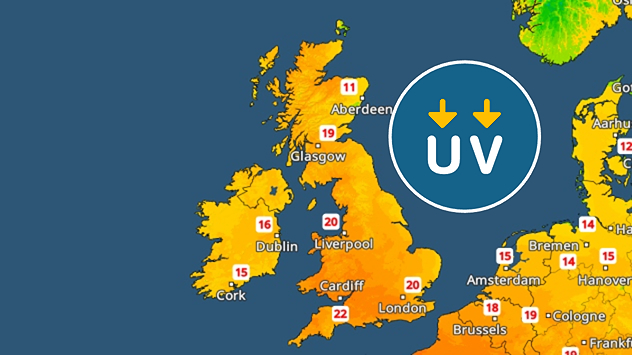
UK and Ireland map shaded in warm tones showing UV levels, with values up to 22 in southern England and lower values in Scotland, plus a circular UV icon.
Tuesday, 7 April 2026

Sunscreen season

UV levels rising with the warmth
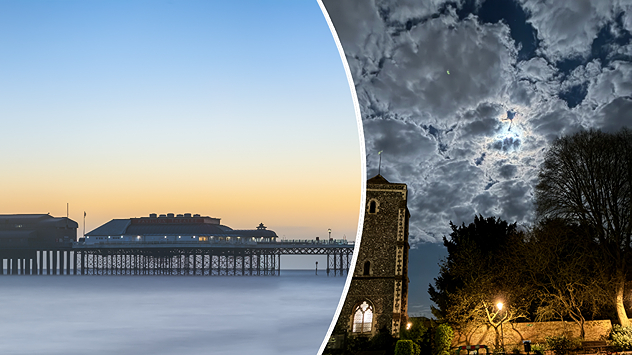
Split image with Cromer Pier at sunset on the left in soft orange-blue tones and a moonlit Canterbury church with dramatic clouds on the right, lit by a streetlamp.
Sunday, 5 April 2026

Your weather - Your shots

Spring captured after the clock change
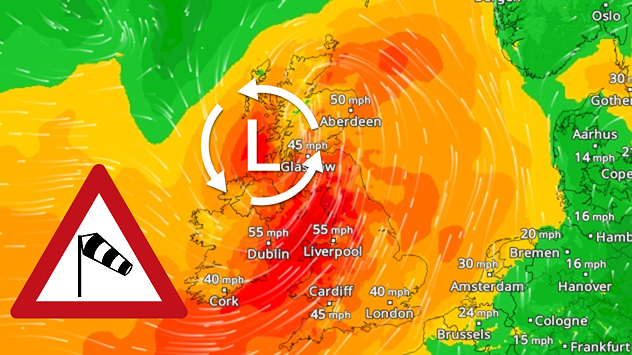
Wind map of the UK and Ireland showing a deep low-pressure system, Storm Dave, with red-orange zones and strong gusts up to 55 mph, plus a windsock warning icon indicating hazardous conditions.
Saturday, 4 April 2026

Severe overnight gales

Storm Dave makes impact
All weather news
This might also interest you
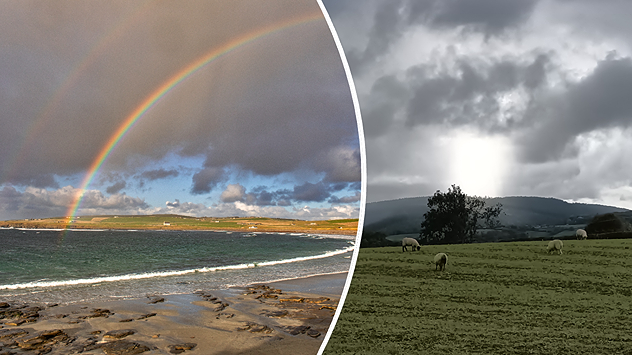
plit image showing a double rainbow over a rocky shoreline on the left and sheep grazing in a green field under stormy clouds on the right.
Sunday, 2 November 2025

Your weather - Your shots

Mixed conditions on an unsettled week
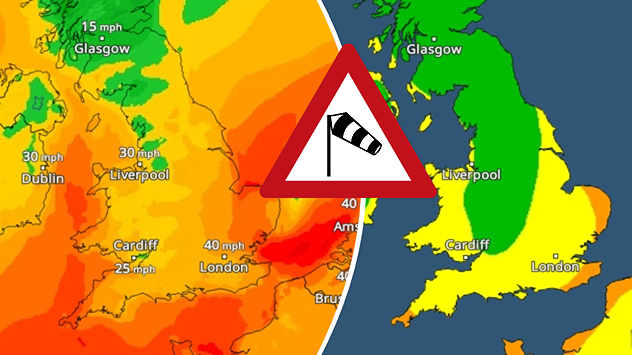
Split weather map showing UK wind speeds in orange-red shades up to 40 mph on the left and warning levels in green-yellow on the right, with a central wind warning sign.
Wednesday, 22 October 2025

Warnings active

Storm Benjamin impacts the UK
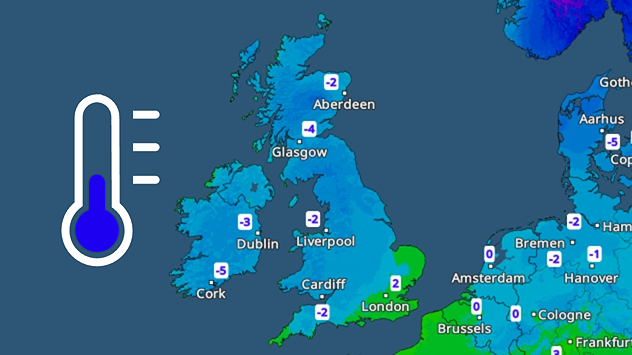
UK temperature map dated 14.02 showing widespread subzero values in blue shading, with readings such as −4 in Glasgow, −3 in Dublin, and −2 in London, alongside a blue thermometer icon.
Friday, 13 February 2026

Icy conditions

A frozen start to the weekend
All articles
Weather & Radar

Weather & Radar is also available on

Google Play StoreApp Store

Company

Contact us Privacy Policy Legal info Accessibility statement

Services

Uploader

Socials

facebooktwittertikToklinkList