Home / Editor's Pick /

Rare phenomenon: Frozen bubbles in Canadian lake

12:30
6 December 2022

Rare phenomenon
Frozen bubbles in Canadian lake

Frozen methane bubbles trapped in Abraham Lake, Canada.Frozen methane bubbles trapped in Abraham Lake, Kootenay Plains, Canada. - © picture alliance

Winter can produce some astonishing works of art, such as these frozen methane bubbles that from beneath the surface of Abraham Lake, Canada.

An extraordinary natural phenomenon attracts several tourists and photographers to Abraham Lake in Canada through the wintertime.

The reservoir on the eastern edge of the Rocky Mountains, in the province of Alberta, is known for its frozen bubbles, most commonly seen from mid-January to early February.

In the clear, dark ice, white bubbles form and in the right light and weather conditions, offer a fascinating sight. Parts of Abraham Lake are already frozen, though temperatures have been well below zero for weeks here.

In the past few days, temperatures have plummeted below -30C. However, given it is still early winter, the 30km long lake has not yet entirely frozen over, which is why later in the season offers optimum conditions.

Methane bubbles

The bubbles trapped in the ice are not air, but methane. Bacteria from vegetation decaying at the bottom of the lake are responsible for this, as they emit methane when they decompose, creating bubbles in the water.

When the temperature drops through winter, the bubbles then become trapped in the ice, suspended just below the surface of the water.

The methane bubbles then rise to the surface, where they form larger bubbles and freeze in the freezing lake. As the lake continues to freeze, vertical stacks of ice bubbles form, frozen in time. Lake Baikal in Siberia is also known for producing these natural creations.

Weather & Radar editorial team
More on the topic
People walk through muddy streets after heavy rain, alongside a rain map of Morocco.
Tuesday, 16 December 2025

New rainfall in sight

Fatalities in Moroccan floods
Weather map showing temperatures and a 4,542 mile route arrow over the Atlantic. Symbols indicate sun, clouds and precipitation from North America to Europe.
Wednesday, 17 December 2025

From Europe to America

Weather front over 4,500 miles long
Map comparison showing 44 degrees in Indulkana and minus 51 degrees in Olenyok. Coloured temperature ranges show stark global contrasts.
Tuesday, 9 December 2025

Global extremes

Almost 100 degrees difference in temperature
All weather news
This might also interest you
Mammatus clouds
Thursday, 21 August 2025

Unusual view

Mammatus clouds over Ireland
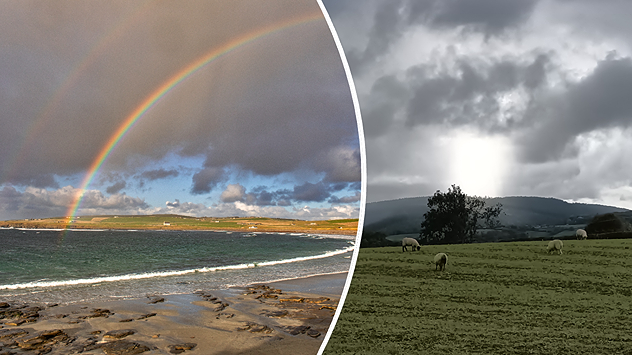
plit image showing a double rainbow over a rocky shoreline on the left and sheep grazing in a green field under stormy clouds on the right.
Sunday, 2 November 2025

Your weather - Your shots

Mixed conditions on an unsettled week
Wednesday, 27 August 2025

Breakfast brief

Frontal system brings heavy rain
All articles
Weather & Radar

Weather & Radar is also available on

Google Play StoreApp Store

Company

Contact us Privacy Policy Legal info Accessibility statement

Services

Uploader

Socials

facebooktwittertikToklinkList