Home
Weather London
WeatherRadar
RainfallRadar
TemperatureRadar
WindRadar
LightningRadar
Weather News
Editor's Pick
Discover the app
Weather widget
Contact us
Apps
Career
Home / Editor's Pick /

Marine heatwave impacts: Pacific waters 7° above-average

11:00
26 August 2023

Marine heatwave impacts
Pacific waters 7° above-average

The area shaded in red denotes above-normal water temperatures.The area shaded in red denotes above-normal water temperatures.

We're all familiar with the idea of a heatwave. But there's another type that's much less visible yet equally concerning: a marine heatwave.

Marine heatwaves are periods of unusually warm ocean temperatures that can last anywhere from days to months.

Just recently, an intense marine heatwave has arrived just offshore the north and central California coast, pushing water temperatures five degrees above their typical levels.

Should we be concerned?

Warmer waters due to marine heatwaves can severely impact marine ecosystems, creating nutrient-deficient "ocean deserts" that make it challenging for marine life to survive.

These temperature spikes are linked to a range of disruptions, from coral bleaching and altered fish migration patterns to the degradation of vital kelp forests along the coast.

The most recent example of an extreme marine heatwave occurred off the coast of South Florida. On July 24th, a buoy in Manatee Bay in the Florida Keys recorded a staggering sea surface temperature of 101.1°F (38.4°C), breaking the previous world record of 99.7°F (37.6°C) set in Kuwait Bay.

Another consequence of marine heatwaves is heightened humidity, resulting in muggier conditions along coastal areas. This added moisture exacerbates discomfort and provides extra fuel for storms.

In the Pacific, for example, elevated water temperatures can intensify tropical cyclones and atmospheric river events. Tropical Storm Hilary serves as a recent example, illustrating how above-average temperatures can both amplify and expand the reach of such weather phenomena.

While ocean heatwaves are a natural occurrence in Earth's oceans, those that are exceptionally warm or prolonged, can have devastating effects on both local wildlife and human communities.

Oceanographers and marine biologists are closely monitoring these events to better understand their immediate and long-term impacts.

Atlantic Ocean warmer than normalread more
Weather & Radar editorial team
More on the topic
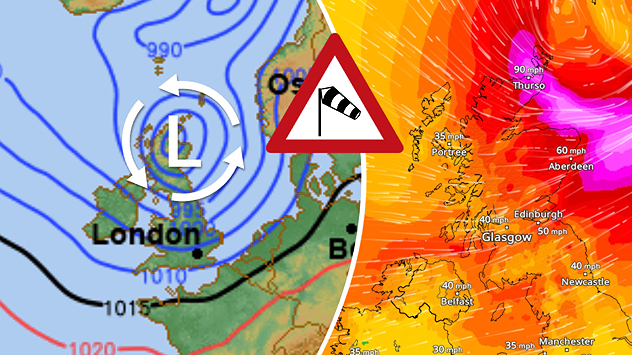
Split weather graphic showing a low-pressure system with tight isobars over the UK on the left and a wind map on the right with strong gusts up to 90 mph, plus a windsock warning icon.
Thursday, 2 April 2026

Gales and blizzards

Storm Dave disrupts Easter weekend
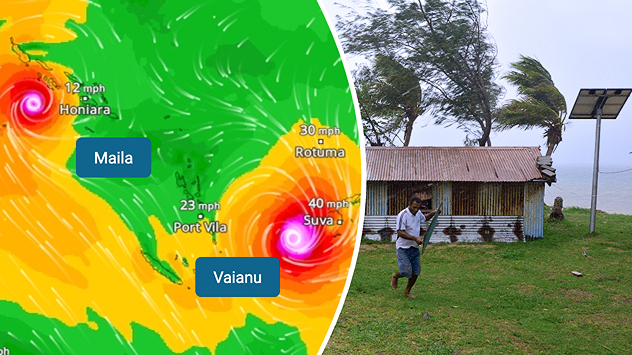
Two cyclones are currently threatening the South Sea islands off the coast of Australia.
Monday, 6 April 2026

Solomon Islands and Fiji

Cyclones threaten South Pacific islands
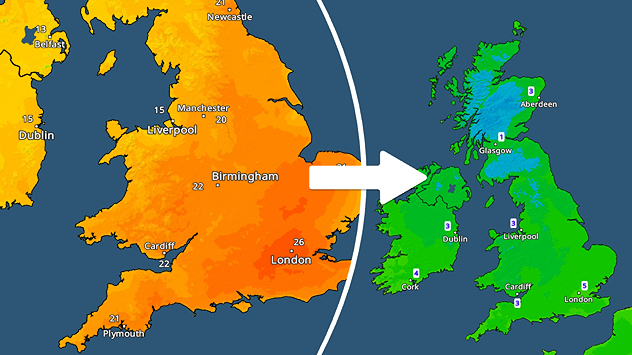
Split UK map showing warm orange temperatures up to 26 degrees on the left transitioning to cooler green tones around 3 to 5 degrees on the right, with an arrow indicating change.
Wednesday, 8 April 2026

A quick shift

High of the year to a cooler spell
All weather news
This might also interest you
Outline of Santa Claus with a yellow and white hat, "Ho-Ho-Ho" next to the outline above a Christmas tree.
Thursday, 25 December 2025

Merry Christmas!

Wishes from Weather & Radar
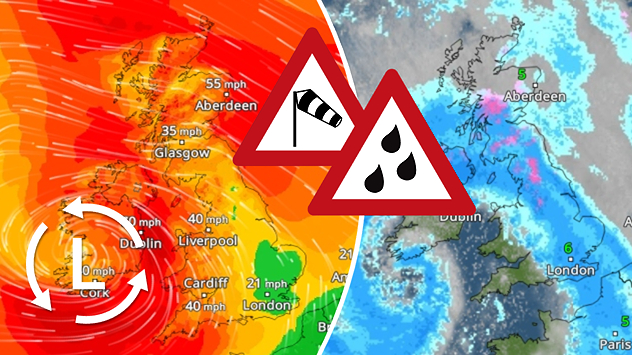
Split image showing strong winds over the UK on a forecast map and widespread rain and snow on a weather radar map.
Tuesday, 27 January 2026

Severe gales & heavy rain

Storm Chandra makes impact
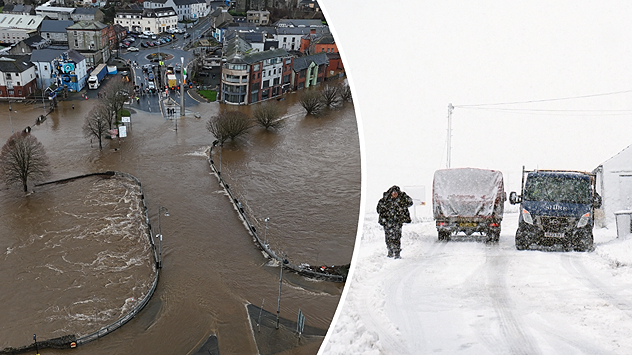
Split image showing aerial flooding in a town with muddy water covering roads on the left, and a rural road on the right blocked by heavy snowfall with vans stopped and a person walking in snow.
Tuesday, 27 January 2026

Storm Chandra

Flooding, gales, and heavy snow
All articles
Weather & Radar

Weather & Radar is also available on

Google Play StoreApp Store

Company

Contact us Privacy Policy Legal info Accessibility statement

Services

Uploader

Socials

facebooktwittertikToklinkList