Home
Weather London
WeatherRadar
RainfallRadar
TemperatureRadar
WindRadar
LightningRadar
Weather News
Editor's Pick
Discover the app
Weather widget
Contact us
Apps
Career
Home / Editor's Pick /

Lufthansa flight: Turbulent weather explained

12:23
6 March 2023

Lufthansa flight
Turbulent weather explained

Lufthansa© picture alliance

Two planes operated by German airlines recently got caught up in severe turbulence. But was it dangerous, and what was the cause?

Turbulence is a sudden change in airflow, and can be caused by several different factors, such as wind or temperature gradients.

Whilst uncomfortable and an inconvenience, turbulence is rarely dangerous, and is a good sign that the plane is performing well to counteract external forces. Often, what feels like large, dramatic drops during turbulence, are just a couple of metres.

In the recent cases, one of the Lufthansa planes was reported to have dropped around 300 metres and did cause minor injuries to those who weren't wearing their seatbelt at the time.

Clear Air Turbulence (CAT)

The significant turbulence was caused by "Clear Air Turbulence". This occurs from time to time in seemingly fine weather, without any visible warning signs such as storm clouds on the horizon.

It is caused when different air masses collide and move at different speeds to one another, often at the altitudes of commercial aircraft at around 10,000 metres. CAT can occur over mountain ranges or in the jet stream, the belt of strong winds in the atmosphere.

Often pilots will utilise the benefits of the jet stream when it is a tailwind, to accelerate the flight time, but remain higher or lower than it in a headwind to avoid turbulence.

So, if you're headed on a plane any time soon, just remember, although unnerving, turbulence is a shift in the airflow and completely normal.

Airplanes are designed to withstand extreme amounts of stress, but if you want to feel the effects of turbulence less, pilots suggest seats directly over the wings of a plane, or towards the front.

Weather & Radar editorial team
More on the topic
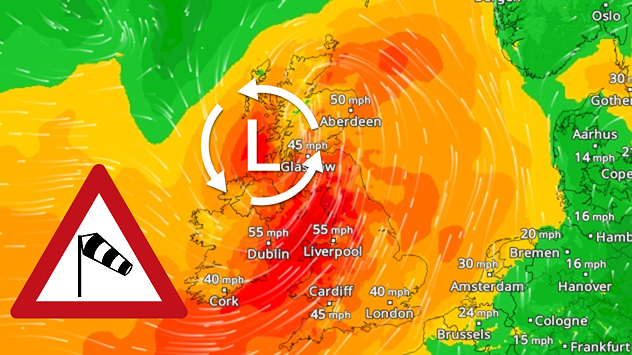
Wind map of the UK and Ireland showing a deep low-pressure system, Storm Dave, with red-orange zones and strong gusts up to 55 mph, plus a windsock warning icon indicating hazardous conditions.
Saturday, 4 April 2026

Severe overnight gales

Storm Dave makes impact
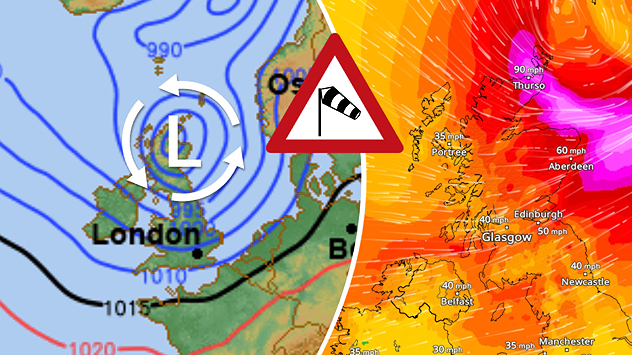
Split weather graphic showing a low-pressure system with tight isobars over the UK on the left and a wind map on the right with strong gusts up to 90 mph, plus a windsock warning icon.
Thursday, 2 April 2026

Gales and blizzards

Storm Dave disrupts Easter weekend
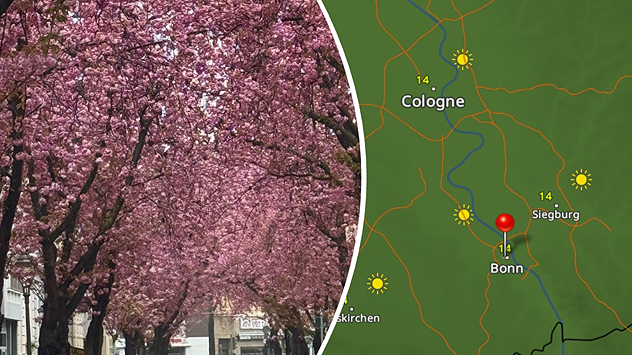
Pink-blossoming cherry trees lining a street next to the weather radar, with sunshine and temperatures around 19 degrees near Bonn.
Tuesday, 7 April 2026

Cherry blossoms in Bonn

Spring bloom on show
All weather news
This might also interest you
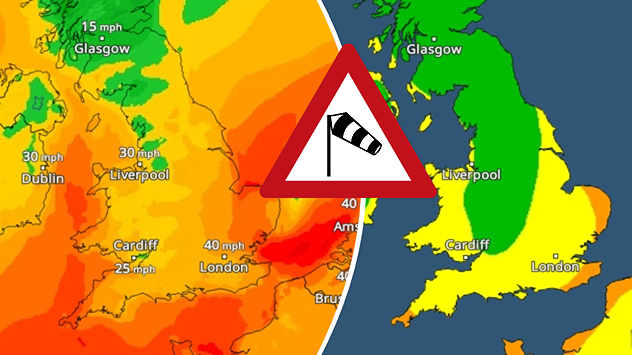
Split weather map showing UK wind speeds in orange-red shades up to 40 mph on the left and warning levels in green-yellow on the right, with a central wind warning sign.
Wednesday, 22 October 2025

Warnings active

Storm Benjamin impacts the UK
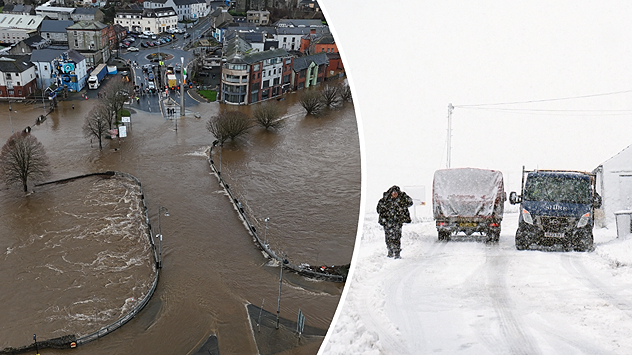
Split image showing aerial flooding in a town with muddy water covering roads on the left, and a rural road on the right blocked by heavy snowfall with vans stopped and a person walking in snow.
Tuesday, 27 January 2026

Storm Chandra

Flooding, gales, and heavy snow
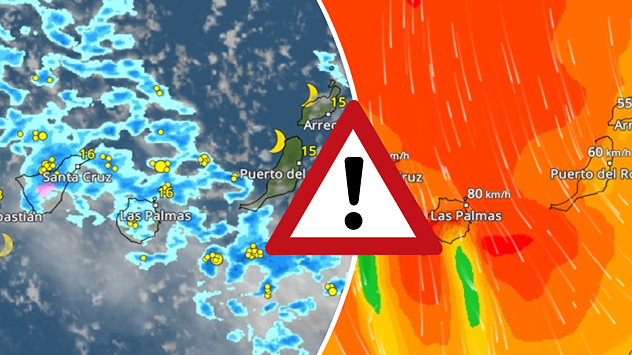
Weather graphic showing rain and wind fields over the Canary Islands and a central warning symbol.
Friday, 12 December 2025

Storm and rain

Turbulent weather in the Canary Islands
All articles
Weather & Radar

Weather & Radar is also available on

Google Play StoreApp Store

Company

Contact us Privacy Policy Legal info Accessibility statement

Services

Uploader

Socials

facebooktwittertikToklinkList