Home
Weather London
WeatherRadar
RainfallRadar
TemperatureRadar
WindRadar
LightningRadar
Weather News
Editor's Pick
Discover the app
Weather widget
Contact us
Apps
Career
Home / Editor's Pick /

Late year features: 10 facts about fog

09:00
23 October 2024

Late year features
10 facts about fog

fog

Autumn has begun and so has the season of fog. Here are some facts, tips and rules of thumb about fog.

In autumn, high-pressure areas can provide not only for a beautiful Indian summer or a golden October as we will be experiencing this week, but also stubborn fog in some places.

1. Fog forms on clear nights

Particularly in the winter months, the earth's surface cools down considerably on clear nights. The temperature drops until it reaches the dew point and condensation begins. The result: fog.

Clouds, on the other hand, act like a blanket and keep the heat on the ground. This inhibits the formation of fog.

2. Warmer on the tops of mountains than valley bottoms

On clear, calm nights conducive to the formation of fog, a temperature inversion takes place. The cold air subsides and drags down to valley bottoms, leaving the higher hill-tops and mountain-tops warmer.

Following normal physics in the troposphere, the lowest layer of the atmosphere, temperature decreases with altitude however. Fog can then form in the valley bottoms, remaining stagnant until a breeze kicks it up and mixes the air around.

3. WeatherRadar shows fog

On the WeatherRadar it is easy to see which areas are affected by fog. If you are leaving for your early morning commute or perhaps a walk in the hills, you can ensure that the destination is outside or above the fog.

4. Shallow fog - quicker to shift

The shallower the cold air over a fog-filled lake is, the faster it can dissipate during the day. With a thicker layer of fog, a larger amount of the air must be heated until the fog disappears.

5. Ghostly phenomena

If sunlight falls on the water droplets of the fog, mysterious optical phenomena, such as Glories or Brocken Spectres can occur. How this works exactly, you can read in the weather lexicon.

Read more on optical phenomena

In addition, in winter, fog and wind can create magical works of art called rime.

6. Wind kills fog

Wind can also dissolve the fog, or prevent its formation. A light wind is enough to kick up the cold surface air, and mix it with warmer air from above.

7. Fog over the water

The areas most often plagued by fog are in river valleys and on lake shores. Especially in autumn, a lot of moisture evaporates from the still, warm waters, conducive for the formation of fog.

On the coasts, a different process causes sea fog, especially in spring.

8. Forecasting fog is tricky

We've all experienced it at some point: although the sun was forecast, we were stuck in permanent grey all day.

Fog forecasts are among the most difficult predictions. The weather models are often off the mark, especially when it comes to the time of dissipation. In general, the later in the fall, the greater the chance of it remaining stubborn all day.

9. Bad air quality in fog

Especially in winter, when there is a lot of heating, pollutants collect in the air near the ground. Because of the inversion, there is hardly any exchange and mixing of the air.

The fine dust pollution then not only increases for us, it also increases the formation of fog as water vapor condenses on the fine soot particles.

10. Fog photography

Autumn fog is among the most beautiful weather features to photograph. The perspective from mountains or hills on the sea of fog also makes for enchanting pictures.

Weather & Radar editorial team
More on the topic
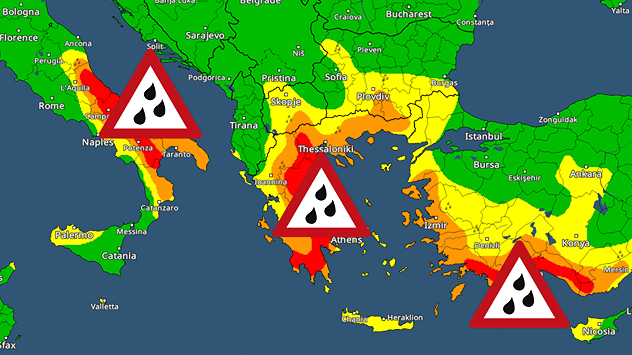
Weather map showing heavy rain warnings over southern Italy, Greece and Turkey. The colour scale indicates rainfall intensity and highlights areas at risk.
Monday, 30 March 2026

A storm is approaching

Turbulent times in the Mediterranean
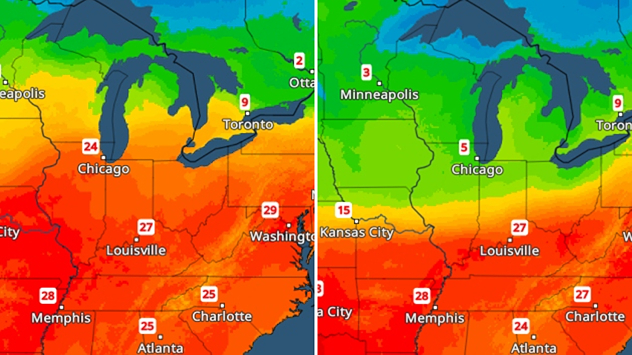
Two-part weather map of the USA: warm air with high temperatures on the left, significantly cooler on the right. The colours change from red/orange to green/blue, particularly in the North and the Midwest.
Tuesday, 31 March 2026

From 25, to 5 degrees

USA: Temperatures are up and down
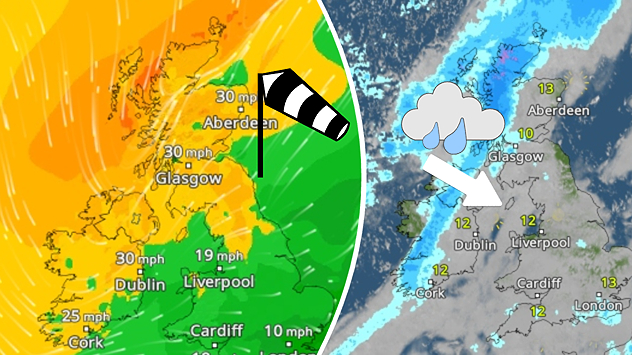
Split weather graphic showing breezy conditions across the UK and Ireland on the left with winds around 25–30 mph, and a rain band moving east across Ireland into Britain on the right.
Tuesday, 31 March 2026

Unsettled midweek

Wet & windy Wednesday for some
All weather news
This might also interest you
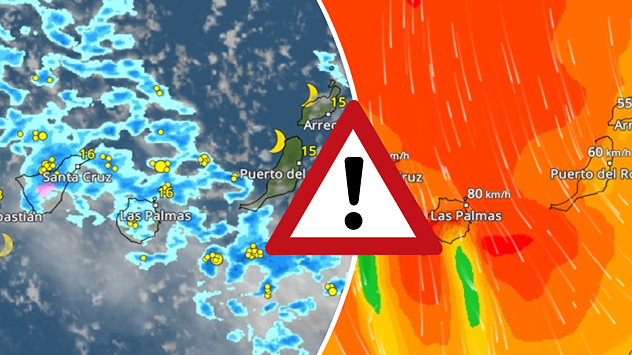
Weather graphic showing rain and wind fields over the Canary Islands and a central warning symbol.
Friday, 12 December 2025

Storm and rain

Turbulent weather in the Canary Islands
Split image showing strong winds over the UK on a forecast map and widespread rain and snow on a weather radar map.
Tuesday, 27 January 2026

Severe gales & heavy rain

Storm Chandra makes impact
plit image showing a double rainbow over a rocky shoreline on the left and sheep grazing in a green field under stormy clouds on the right.
Sunday, 2 November 2025

Your weather - Your shots

Mixed conditions on an unsettled week
All articles
Weather & Radar

Weather & Radar is also available on

Google Play StoreApp Store

Company

Contact us Privacy Policy Legal info Accessibility statement

Services

Uploader

Socials

facebooktwittertikToklinkList