Home
Weather London
WeatherRadar
RainfallRadar
TemperatureRadar
WindRadar
LightningRadar
Weather News
Editor's Pick
Discover the app
Weather widget
Contact us
Apps
Career
Home / Editor's Pick /

Hello February 29: This is why we have leap years

13:00
29 February 2024

Hello February 29
This is why we have leap years

In diesem Jahr gibt es den 29. Februar, weil 2024 ein Schaltjahr ist.Thanks to 2024 being a leap year, today we have an extra day.

It is a rare date today! February 29. Typically the year has just 365 days but 2024 is a leap year. So why do we have the extra day?

February sees 29 days instead of 28 as in "normal" years thanks to a calendar featuring 366 days.

The reason? Earth orbits the Sun in an average of 365 days, five hours, 48 minutes and 45 seconds. However, a calendar year lasts 365 days, creating a deficit. To compensate for this, there is a leap year every four years. However, this still does not perfectly capture the orbit around the sun.

A leap year is also set every 100 years, unless the centuries are divisible by 400, as in the year 2000. Our calendar is therefore ahead of its time, so to speak. This is also reflected in the earlier start date of the seasons.

From 2048, the astronomical start of spring will therefore even take place on 19 March. In 2100, a leap year will be skipped for the next time, so that from 2102 the start of spring will once again fall on March 21.

Seasons depend on the position of the sun

The different seasons are determined by the inclination of the earth's axis to the Sun's orbit. Until now, the Sun has been exactly at its zenith at the equator on March 20 or 21. In the coming years, it will usually be March 20 and later also March 19.

Therefore, leap years are essential for maintaining our regular seasonal weather conditions in the long-term.

Meteorological spring officially begins on March 1, check back tomorrow to celebrate its arrival and learn more on why there is a difference.

Spring: Snowdrops captured by youread more
Weather & Radar editorial team
More on the topic
A harbour in Crete with a reddish-brown, overcast sky
Friday, 3 April 2026

Blood red skies

Dust storm in Crete
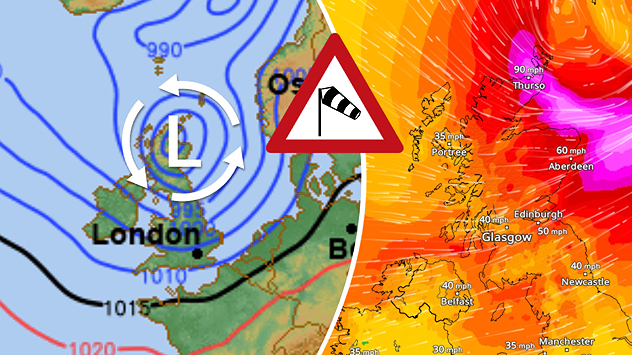
Split weather graphic showing a low-pressure system with tight isobars over the UK on the left and a wind map on the right with strong gusts up to 90 mph, plus a windsock warning icon.
Thursday, 2 April 2026

Gales and blizzards

Storm Dave disrupts Easter weekend
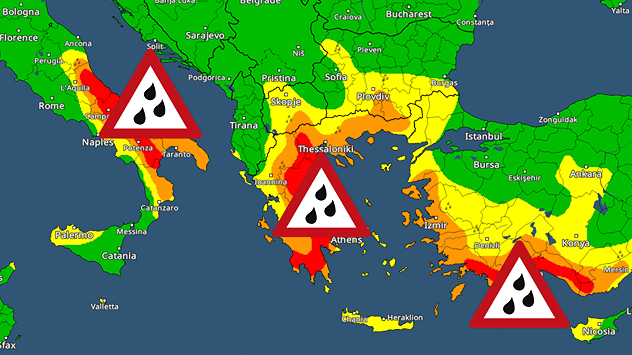
Weather map showing heavy rain warnings over southern Italy, Greece and Turkey. The colour scale indicates rainfall intensity and highlights areas at risk.
Monday, 30 March 2026

A storm is approaching

Turbulent times in the Mediterranean
All weather news
This might also interest you
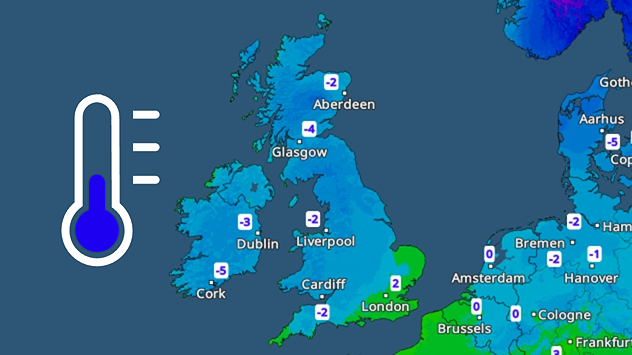
UK temperature map dated 14.02 showing widespread subzero values in blue shading, with readings such as −4 in Glasgow, −3 in Dublin, and −2 in London, alongside a blue thermometer icon.
Friday, 13 February 2026

Icy conditions

A frozen start to the weekend
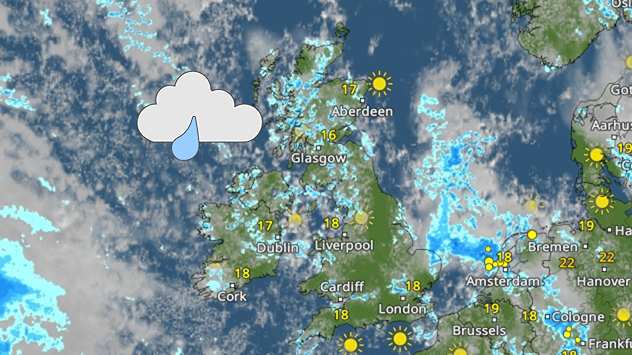
Weather map of the UK and Ireland showing scattered showers with cloudy patches across much of the region, especially around western and northern areas. Sunshine symbols appear over London, Cardiff, and parts of southern England, while temperatures range from 17°C to 18°C in most places. Areas of heavier rain are visible over the Atlantic to the west.
Friday, 29 August 2025

Breakfast brief

Unsettled conditions into the weekend
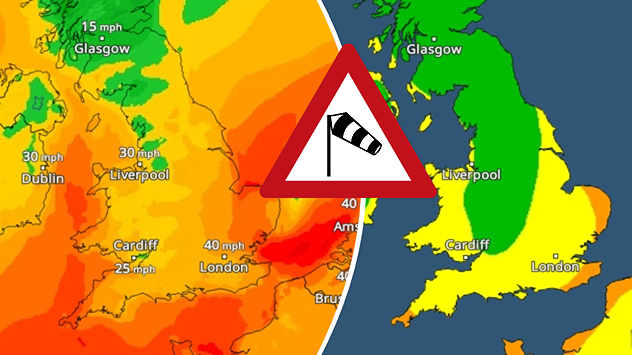
Split weather map showing UK wind speeds in orange-red shades up to 40 mph on the left and warning levels in green-yellow on the right, with a central wind warning sign.
Wednesday, 22 October 2025

Warnings active

Storm Benjamin impacts the UK
All articles
Weather & Radar

Weather & Radar is also available on

Google Play StoreApp Store

Company

Contact us Privacy Policy Legal info Accessibility statement

Services

Uploader

Socials

facebooktwittertikToklinkList