Home
Weather London
WeatherRadar
RainfallRadar
TemperatureRadar
WindRadar
LightningRadar
Weather News
Editor's Pick
Discover the app
Weather widget
Contact us
Apps
Career
Home / Editor's Pick /

December astronomy guide: Hyperactive Geminids, Ursids, and the winter solstice

16:00
9 December 2023

December astronomy guide
Hyperactive Geminids and winter solstice

star-gazing

The countdown to 2024 is underway with advent calendars being opened across the country, but before we leave the year we have a few astronomical delights to see.

Despite a sluggish start to December in the night sky, the first key event of the month arrives December 12… or rather it doesn't. A new moon will rise, meaning that the placement of the moon renders it invisible from our vantage point.

This creates an ideal night sky for star-gazing, and we have the most active meteor shower of the year, reaching its peak alongside this moon.

Sometimes dubbed as the 'King of the Meteor Showers', the Geminids reach their peak late in the night of December 13, lasting into the early hours. Capable of producing up to 120 meteors per hour at its peak, the shower itself produces a vibrant display of unusually bright shooting stars.

Whites, yellows, even a few green, red, or blue meteors will blaze overhead. The multicolour display is thanks to the presence of various metals in the rocks.

Tips for stargazing

For the best chance to see a meteor, find a dark area away from light pollution. Ideally in the countryside away from towns.

It has previously been recorded that up to 150 meteors an hour have appeared during the peak, and with a new moon leaving the night sky free from light, this really is the perfect opportunity to wish upon a star.

If you miss out on the Geminids, just days later, the Ursid Meteor Shower reaches its peak on the night of December 22. You will need some more luck however, with a peak rate of just 5 to 10 meteors per hour plus the moon entering its waxing gibbous phase meaning only the brightest meteors will be visible.

In line with the shower on December 22, we enter the first day of astronomical winter with the December Solstice.

With the South Pole tilting towards the sun, this marks the date at which the days start growing lighter once again, and astronomical winter. While in the Southern Hemisphere, it marks the beginning of summer.

Our final event of the month, and the year, is the arrival of the Cold Moon. Like all full moons, its name derives from Native Americans, who dubbed the December moon the cold moon on account of the chilly winter evenings in which it rose.

Don't forget that you can find astronomical information on your home screen, including the timing of the Cold Moon rising on the day, plus what stage the moon is in at any time. Find it on your app's home screen.

If you spend a winter night under the stars for any of these events, and capture it on camera, we would love to see! Use our dedicated uploaders for the UK or Ireland to submit images and videos.

Ryan Hathaway
More on the topic
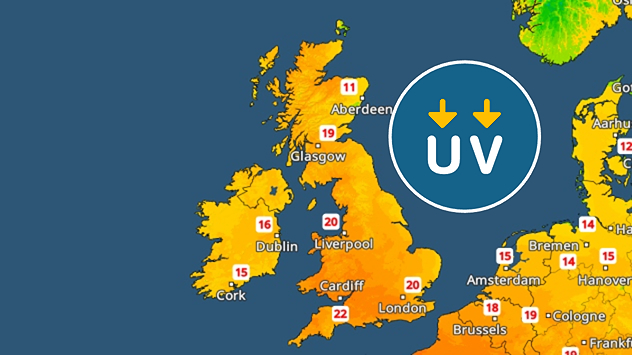
UK and Ireland map shaded in warm tones showing UV levels, with values up to 22 in southern England and lower values in Scotland, plus a circular UV icon.
Tuesday, 7 April 2026

Sunscreen season

UV levels rising with the warmth
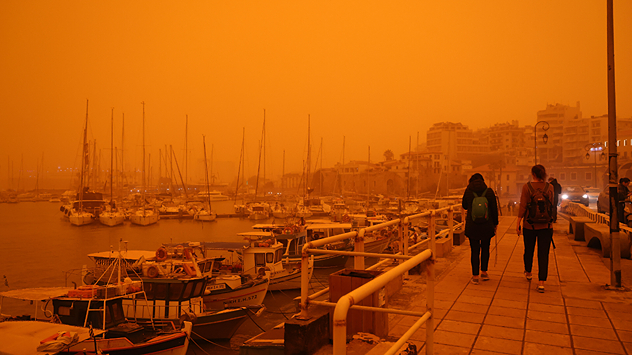
A harbour in Crete with a reddish-brown, overcast sky
Friday, 3 April 2026

Blood red skies

Dust storm in Crete
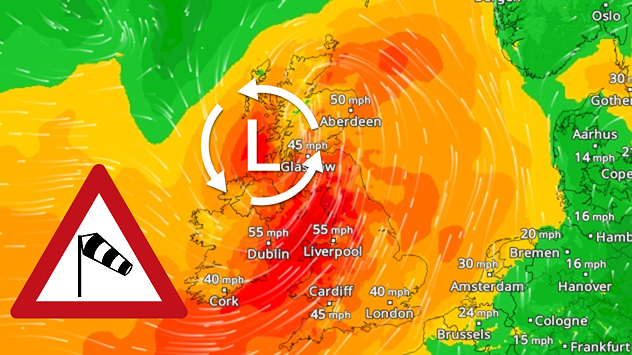
Wind map of the UK and Ireland showing a deep low-pressure system, Storm Dave, with red-orange zones and strong gusts up to 55 mph, plus a windsock warning icon indicating hazardous conditions.
Saturday, 4 April 2026

Severe overnight gales

Storm Dave makes impact
All weather news
This might also interest you
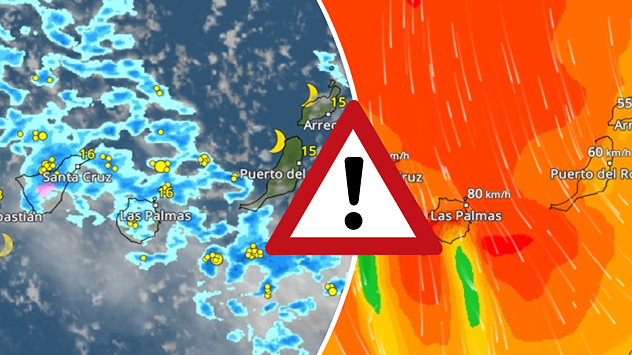
Weather graphic showing rain and wind fields over the Canary Islands and a central warning symbol.
Friday, 12 December 2025

Storm and rain

Turbulent weather in the Canary Islands
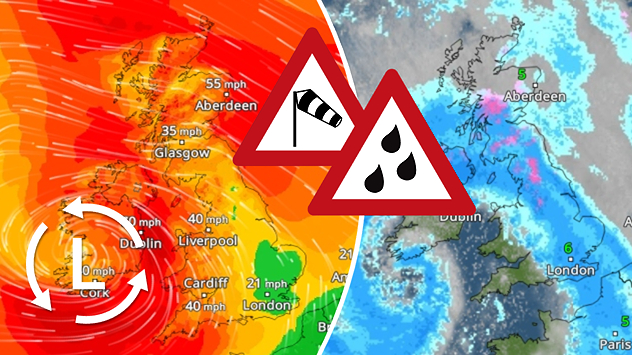
Split image showing strong winds over the UK on a forecast map and widespread rain and snow on a weather radar map.
Tuesday, 27 January 2026

Severe gales & heavy rain

Storm Chandra makes impact
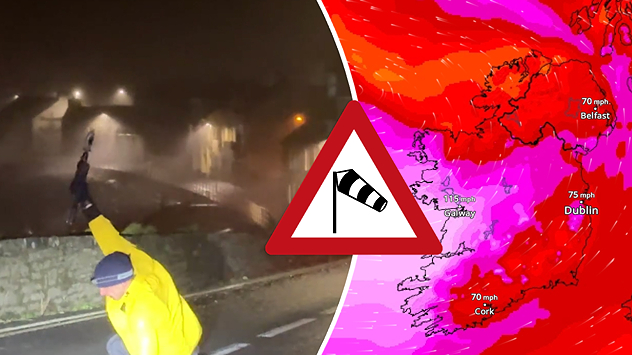
Split image showing a person in a yellow jacket struggling against strong winds and heavy rain on a street at night on the left, and an Irish wind forecast map on the right with red and purple shading, gusts up to 75 mph, and a wind warning icon, divided by a curved white line.
Saturday, 24 January 2026

On this day...

Historic Storm Éowyn arrives
All articles
Weather & Radar

Weather & Radar is also available on

Google Play StoreApp Store

Company

Contact us Privacy Policy Legal info Accessibility statement

Services

Uploader

Socials

facebooktwittertikToklinkList