Home
Weather London
WeatherRadar
RainfallRadar
TemperatureRadar
WindRadar
LightningRadar
Weather News
Editor's Pick
Discover the app
Weather widget
Contact us
Apps
Career
Home / Editor's Pick /

Amidst the heatwave: Does heat cause forest fires?

07:00
29 July 2023

Amidst the heatwave
Does heat cause forest fires?

wildfire

With large parts of southern Europe suffering devastating wildfires, are high temperatures responsible?

With temperatures reaching and even exceeding 40-45°C, hundreds of emergency forces have been battling numerous forest fires in southern Italy and Greece for days.

Sicily and the Aegean island of Rhodes have been particularly affected. In addition to carelessness and arson, spontaneous combustion due to the heat is repeatedly cited as the cause of the fires.

But can fires really ignite spontaneously at high air temperatures?

High temperatures alone do not trigger forest fires. The combination of intense heat and prolonged drought only sets the stage for fires to start more easily - especially when an ignition source is present.

Parched vegetation cannot burst into flames without human intervention. Even temperatures of 50 to 60°C are not sufficient to start a fire; they would need to be well over 100°C.

Freshly cut hay can actually self-ignite, though only if stored too densely by humans. Decomposition processes of moist hay can cause the it to heat up by more than 150°C, releasing flammable fermentation gases, which can suddenly ignite.

However, this process can even take place in cooler weather, so is not a result of hot summer air, but rather faulty storage and human negligence.

Straw must be heated to at least 250°C before it bursts into flames, while wood, depending on the residual moisture, can only catch fire between 280 and 340°C. So spontaneous combustion is out of the question.

Glass is often known to be a fire-starter, but relies on a very specific set of circumstances, including the type of glass, shape and surface properties.

What about lightning?

The only natural cause of such fires may be ignition by lightning. However in our latitudes, thunderstorms are often accompanied by heavy downpours, so this cause is generally rare.

Ultimately, carelessness handling open fires or throwing away cigarette butts remain the likely cause of most forest and bush fires. Negligent, and in some cases even intentional arson are often the cause of such devastating fire disasters.

More on the topic
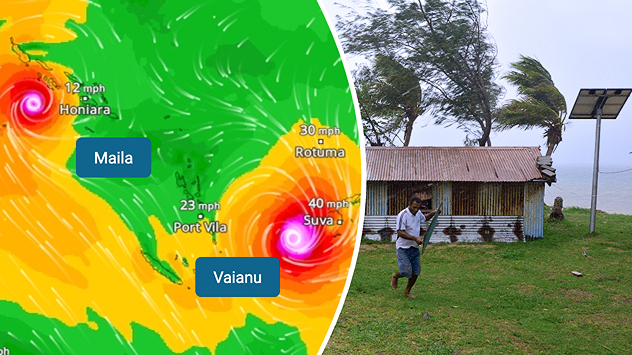
Two cyclones are currently threatening the South Sea islands off the coast of Australia.
Monday, 6 April 2026

Solomon Islands and Fiji

Cyclones threaten South Pacific islands
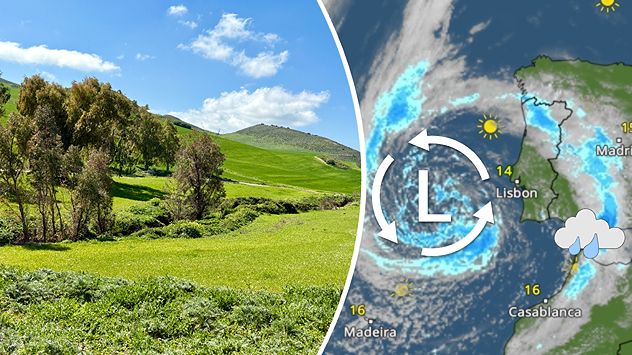
A green, rolling landscape after rain. Alongside it, a weather map showing a low-pressure system. Indications of further rainfall.
Wednesday, 8 April 2026

New low approaching

Morocco bursting to life after rain
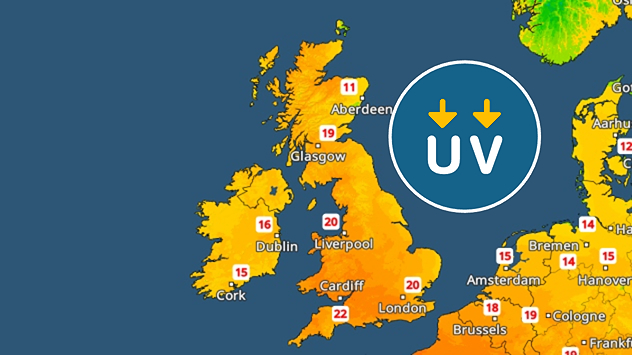
UK and Ireland map shaded in warm tones showing UV levels, with values up to 22 in southern England and lower values in Scotland, plus a circular UV icon.
Tuesday, 7 April 2026

Sunscreen season

UV levels rising with the warmth
All weather news
This might also interest you
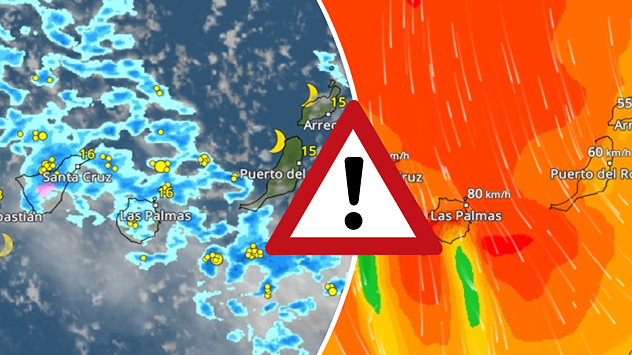
Weather graphic showing rain and wind fields over the Canary Islands and a central warning symbol.
Friday, 12 December 2025

Storm and rain

Turbulent weather in the Canary Islands
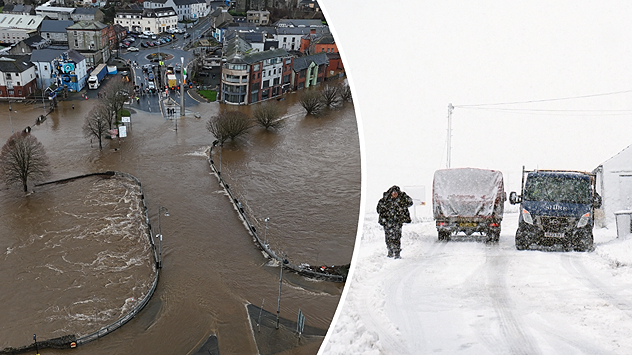
Split image showing aerial flooding in a town with muddy water covering roads on the left, and a rural road on the right blocked by heavy snowfall with vans stopped and a person walking in snow.
Tuesday, 27 January 2026

Storm Chandra

Flooding, gales, and heavy snow
Illustration of white and yellow fireworks on a blue background.
Wednesday, 31 December 2025

Hello 2026

Happy New Year
All articles
Weather & Radar

Weather & Radar is also available on

Google Play StoreApp Store

Company

Contact us Privacy Policy Legal info Accessibility statement

Services

Uploader

Socials

facebooktwittertikToklinkList