Home / Editor's Pick /

Weather myths: Can crickets reveal the temperature?

08:00
28 March 2023

Weather myths
Can crickets reveal the temperature?

crickets

With spring here the chirping of crickets will soon reappear in our gardens and outdoor spaces, did you know you could use their chirps to work out the temperature?

Yes, as strange as it sounds there is a way of using the frequency of the chirps to calculate how warm it is in your area.

The relationship was first discovered by Margarette W. Brooks in 1881 but is known as the Dolbear’s Law after Amos Dolbear who published the findings in 1897.

It’s a simple measure to carry out. Simply count the number of chirps in 25 seconds, divide that number by three and add four to find the temperature in Celsius.

This doesn’t work as accurately with field crickets as their chirping is influenced by other factors but will still provide a rough temperature.

So, as the crickets begin to reappear and their chirps once again flow through the air try this trick yourself.

Ryan Hathaway
More on the topic
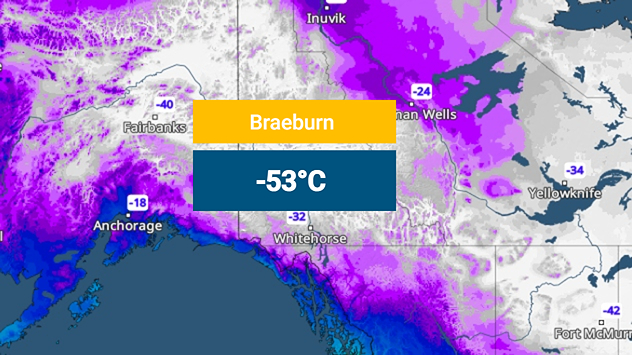
The weather map shows extremely low temperatures in Canada.
Monday, 15 December 2025

Minus 53 degrees

Record cold in Canada's Yukon Territory
Shooting stars, part of the Geminid meteor shower.
Saturday, 13 December 2025

Spot a shooting star

King of meteor showers at its peak
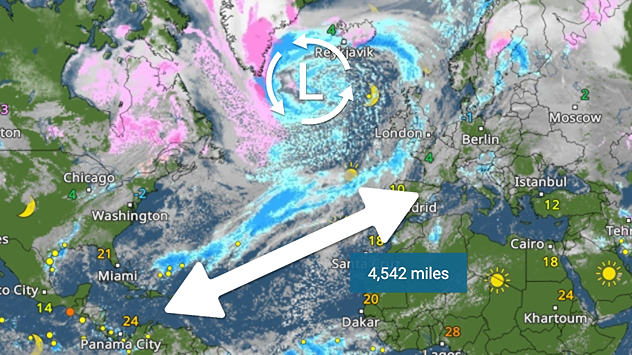
Weather map showing temperatures and a 4,542 mile route arrow over the Atlantic. Symbols indicate sun, clouds and precipitation from North America to Europe.
Wednesday, 17 December 2025

From Europe to America

Weather front over 4,500 miles long
All weather news
This might also interest you
Sunday, 24 August 2025

Your weather - Your shots

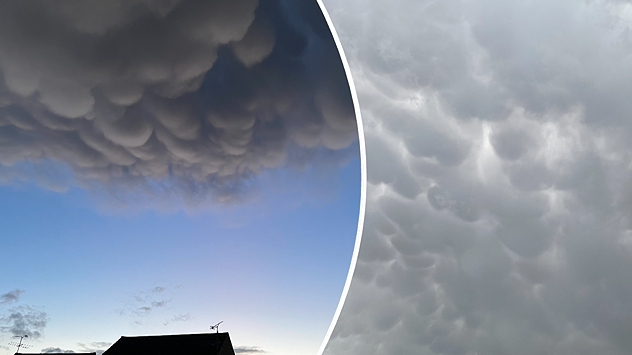
Mammatus clouds widely spotted
plit image showing a double rainbow over a rocky shoreline on the left and sheep grazing in a green field under stormy clouds on the right.
Sunday, 2 November 2025

Your weather - Your shots

Mixed conditions on an unsettled week
Split weather map showing the UK and Ireland. The left side illustrates strong winds circulating around a low-pressure system, with gusts of 20–30 mph highlighted in orange and yellow. The right side shows radar imagery with widespread blue rain bands and patches of thunderstorms, especially over northern England and Scotland.
Thursday, 28 August 2025

Breakfast brief

Remaining widely unsettled
All articles
Weather & Radar

Weather & Radar is also available on

Google Play StoreApp Store

Company

Contact us Privacy Policy Legal info Accessibility statement

Services

Uploader

Socials

facebooktwittertikToklinkList