Home / Editor's Pick /

UV Radiation: UVA, UVB and the UV Index

11:00
10 July 2022

Safety in the sun
UV Radiation: UVA, UVB and the UV Index

sunshine

As temperatures are rising across the British Isles, most of us are spending more time outside. But with the longer, hotter and sunnier days comes the danger of increased ultraviolet (UV) radiation.

UV radiation is a type of energy produced by the sun ray's and is the main cause of skin cancer.

The sun's UV rays can reach people in three ways: directly from the sun, scattered and/or reflected by the environment depending on the time of day, season and your location.

Even on a cloudy day, UV levels can be high as it is able to be reflected and scattered in the clouds.

There are three types of UV rays: UVA, UVB and UVC. UVC is the most dangerous form of UV radiation, but luckily this is absorbed by the atmosphere before it reaches Earth. UVB penetrates the top layer of the skin and leads to sunburn.

UVA, however is the most potent source of UV which we are exposed to all year long. UVA can even pass through windows and clouds and penetrates deep into our skin leading to ageing and increases our risk of skin cancer.

Because of the dangers associated with increased levels of UV, particularly in the summer months when UV radiation is at its strongest, the UV Index was created:

The UV Index helps individuals make decisions about how much time should be spent in the sun and what level of protection will be needed.

The higher the UV Index, the stronger the strength of the UV and faster skin will burn.

Across parts of the UK, UV levels are forecast to reach 7 or 8 on the UV Index.

When UV levels are forecast this high, it means there is a risk of burning within 15-30 minutes, with individuals advised to keep out of direct sunlight around midday.

It is also important to make sure protective clothing is worn and sun scream with an SPF of 30 is applied every two hours to prevent sunburn and irritation.

Weather & Radar editorial team
More on the topic
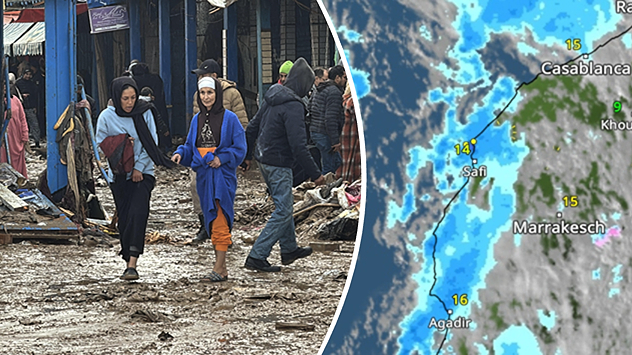
People walk through muddy streets after heavy rain, alongside a rain map of Morocco.
Tuesday, 16 December 2025

New rainfall in sight

Fatalities in Moroccan floods
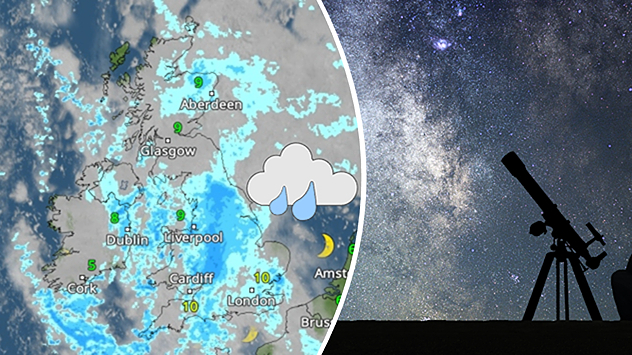
Split image showing a night-time UK rain radar map with blue precipitation bands, city temperature markers, and a rain cloud icon on the left, and a star-filled night sky with the Milky Way and a silhouetted telescope on the right, divided by a curved white line.
Sunday, 21 December 2025

Ursid meteor shower

Wish upon a Christmas star
Dense green forest with tall trees as bright sunlight streams through the canopy, casting long shadows across the leafy ground.
Sunday, 21 December 2025

Winter solstice

Days start getting longer from now!
All weather news
This might also interest you
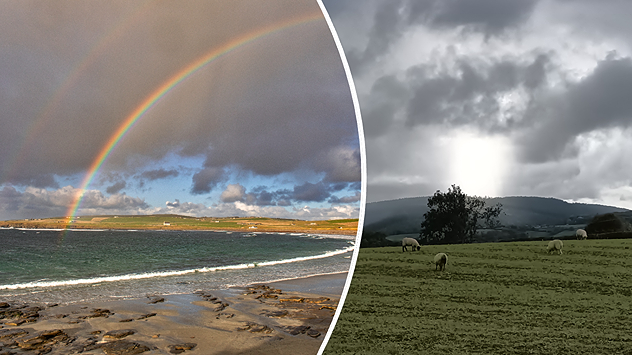
plit image showing a double rainbow over a rocky shoreline on the left and sheep grazing in a green field under stormy clouds on the right.
Sunday, 2 November 2025

Your weather - Your shots

Mixed conditions on an unsettled week
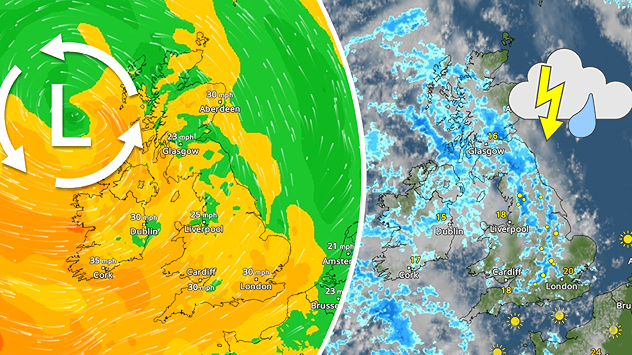
Split weather map showing the UK and Ireland. The left side illustrates strong winds circulating around a low-pressure system, with gusts of 20–30 mph highlighted in orange and yellow. The right side shows radar imagery with widespread blue rain bands and patches of thunderstorms, especially over northern England and Scotland.
Thursday, 28 August 2025

Breakfast brief

Remaining widely unsettled
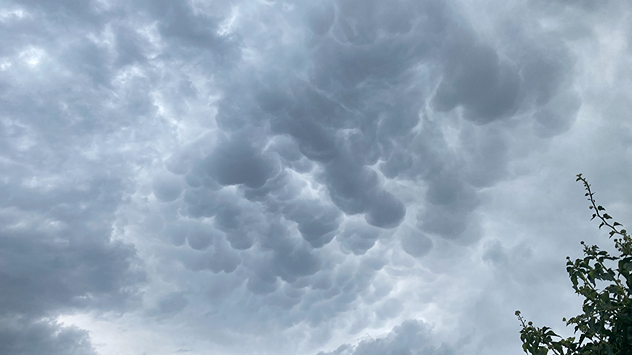
Mammatus clouds
Thursday, 21 August 2025

Unusual view

Mammatus clouds over Ireland
All articles
Weather & Radar

Weather & Radar is also available on

Google Play StoreApp Store

Company

Contact us Privacy Policy Legal info Accessibility statement

Services

Uploader

Socials

facebooktwittertikToklinkList