Home / Editor's Pick /

Snow cannons at work: Artificial snow for winter sports

Snow cannons at work
Artificial snow for winter sports

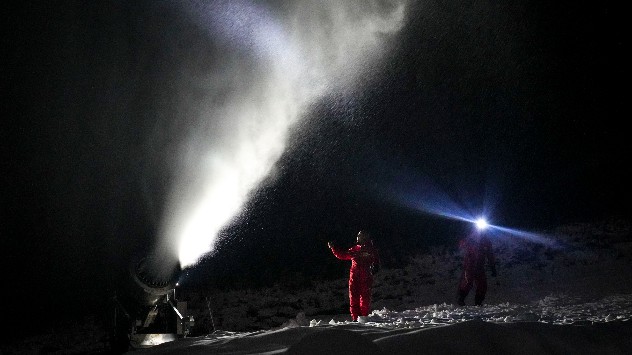
Snow cannonSnow cannon at work at the Changbai Mountain Ski Resort. - © picture alliance

Snow cannons are widely used around the world where natural snow is insufficient, for the likes of the Beijing Olympics and Paralympics back in 2022.

China saw its warmest year on record in 2022 and as a result experienced drought conditions. Despite some natural snow at high altitudes, widespread use of artificial snow was needed for the winter Olympic sports.

High-pressure conditions, with clear and cold nights, are ideal for the production of artificial snow which is created by firing small water droplets into the air where they freeze and fall to the ground.

Additional nucleators are often added to the water, which helps ice crystals form faster.

Artificial snow lasts longer than the real thing but provides a heavier feel for skiers due to the higher water content.

The use of snow cannons is increasingly popular, with more than 60% of the world’s ski resorts now using them to supplement a decreasing amount of natural snowfall.

Using artificial snow is nothing new for the Winter Olympics, however. The first time it was used was in 1980 in Lake Placid, New York, USA, when a dry winter produced less snow than normal.

In addition to the ongoing drought, climate change has influenced the need for artificial snow on the slopes.

To make and provide artificial snow, officials used water from nearby reservoirs known as Foyukou and Baihepu.

Snowfarming in Switzerlandread more
Weather & Radar editorial team
This might also interest you
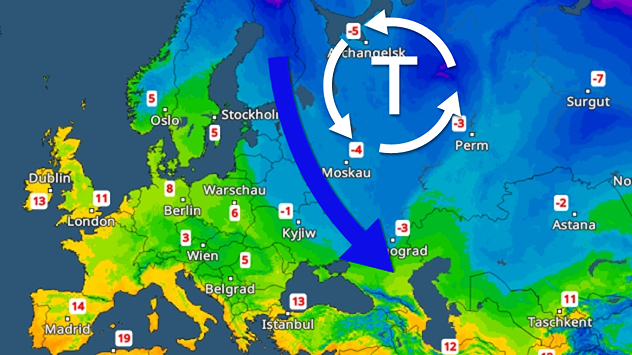
Map of Europe showing low pressure over Russia and a strong cold air flow towards Eastern Europe. Significant drop in temperatures across large parts of the east.
Thursday, 11 December 2025

Frost and snowfall

Cold air intrusion in Eastern Europe
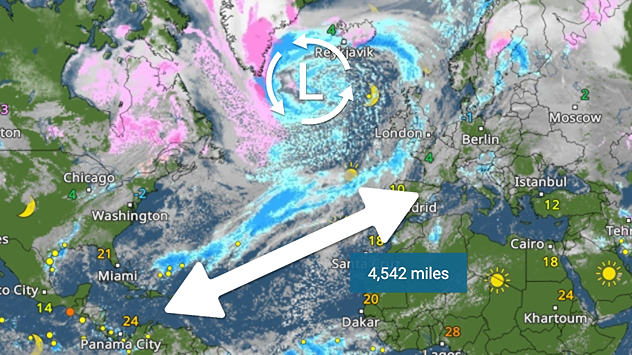
Weather map showing temperatures and a 4,542 mile route arrow over the Atlantic. Symbols indicate sun, clouds and precipitation from North America to Europe.
Wednesday, 17 December 2025

From Europe to America

Weather front over 4,500 miles long
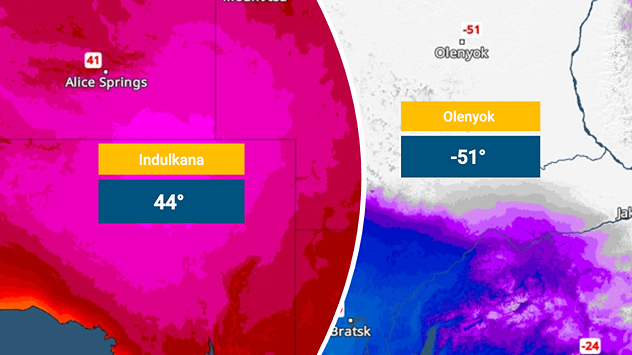
Map comparison showing 44 degrees in Indulkana and minus 51 degrees in Olenyok. Coloured temperature ranges show stark global contrasts.
Tuesday, 9 December 2025

Global extremes

Almost 100 degrees difference in temperature
All articles
Weather & Radar

Weather & Radar is also available on

Google Play StoreApp Store

Company

Contact us Privacy Policy Legal info Accessibility statement

Services

Uploader

Socials

facebooktwittertikToklinkList