Home / Editor's Pick /

Qatar World Cup 2022: How climate affects football

08:00
10 December 2022

Qatar World Cup 2022
How climate affects football

qatar

The first FIFA World Cup was played in 1930. Since then, global temperatures have risen sharply. How has the heat affected this year’s World Cup in Qatar?

The rate of warming, globally, since 1981 has been 0.18C per decade. For Qatar, the warming has also been sharply increasing since late last century.

The mean temperature in 2001 was 28.22C. In 2021, the mean temperature was 29.42C. Temperatures have been increasing dramatically in these 20 years, in comparison to the previous 20 years, where the mean temperature was 27.54C in 1981.

The previous century’s rate was 0.68C, while in the last 20 years within this century, the rate of temperature change has almost doubled to 1.22C.

This heat puts everyone at risk. The World Cup simply could not have been played in the summertime in Qatar, which is when this championship is usually played.

Average afternoon temperatures in Qatar in the summer range between35 and 36.5C. These months are also usually the ones with the least precipitation, so there is no relief. Consequently, the World Cup was moved to the winter this year.

Even before it started, many workers, like construction workers, suffered from extreme heat, who had been working tirelessly to build stadiums and buildings in preparation for this worldly event.

The high temperatures are also worsened by high humidity levels. Moisture from the Persian Gulf makes this region a place with high humidity that can be deadly. The death rate of foreign workers is known to have increased in Qatar in the last few years.

It is also estimated that there are over a million visitors in Qatar, with many of these people, including players, not used to this heat, especially in December. Currently, this area is experiencing some of the most extreme heat on the planet.

What’s being done?

Some say that the World Cup should not have been moved, but if the Cup had been held in summer, players, fans, and workers would have experienced between 50% and 70% more hours of intense heat, which would have increased fatalities significantly.

Olympic committees have been putting in new rules to protect players from the heat. In 2014 FIFA introduced water breaks during a match at minute-30 and 75 when there is extreme heat.

Host nations now need to invest more money in building resilient infrastructure, as well as air-conditioned stadiums to protect workers and visitors.

Weather & Radar editorial team
More on the topic
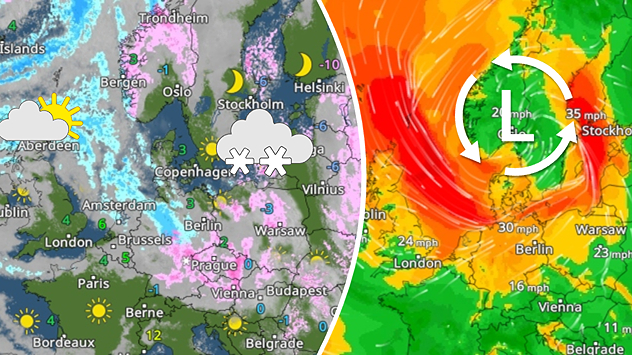
Weather radar for New Year's Eve shows snowfall in Central and Eastern Europe (left) and wind radar with strong winds on New Year's Day (right)
Monday, 29 December 2025

Cold in the UK & Ireland

New Year's outlook brings snow
Dense green forest with tall trees as bright sunlight streams through the canopy, casting long shadows across the leafy ground.
Sunday, 21 December 2025

Winter solstice

Days start getting longer from now!
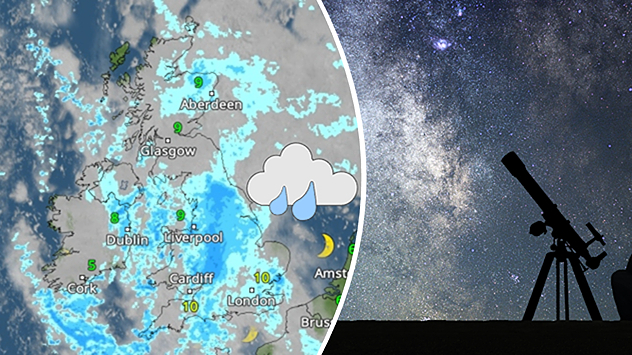
Split image showing a night-time UK rain radar map with blue precipitation bands, city temperature markers, and a rain cloud icon on the left, and a star-filled night sky with the Milky Way and a silhouetted telescope on the right, divided by a curved white line.
Sunday, 21 December 2025

Ursid meteor shower

Wish upon a Christmas star
All weather news
This might also interest you
Sunday, 24 August 2025

Your weather - Your shots

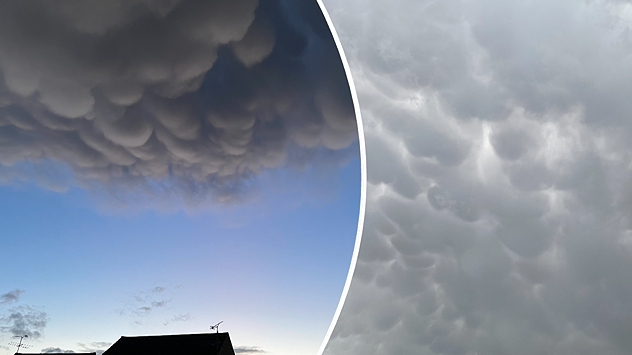
Mammatus clouds widely spotted
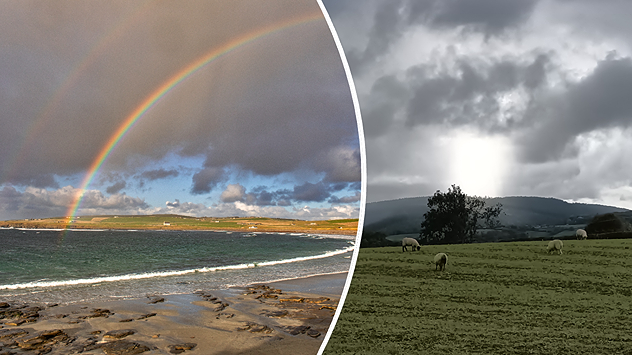
plit image showing a double rainbow over a rocky shoreline on the left and sheep grazing in a green field under stormy clouds on the right.
Sunday, 2 November 2025

Your weather - Your shots

Mixed conditions on an unsettled week
Monday, 25 August 2025

Bank holiday outlook

Warm day turning gusty in places
All articles
Weather & Radar

Weather & Radar is also available on

Google Play StoreApp Store

Company

Contact us Privacy Policy Legal info Accessibility statement

Services

Uploader

Socials

facebooktwittertikToklinkList