Home / Editor's Pick /

Nights are warming faster than days

06:00
7 June 2022

Climate change
Nights are warming faster than days

Cityscape at night

After unseasonable weather to start summer, things will soon be getting warmer. It may also be that our evenings get hotter than our days.

A study says climate change is disproportionately warming nights in over half of the world.

In 54% of the land surface on Earth, night-time warming is more common than daytime warming. Using records from 1983 to 2017, a team from the University of Exeter discovered that night-time temperatures are, on average, 0.25 degrees Celsius warmer than daytime measurements.

It is believed that clouds are the main factor behind the imbalance. During the day they shield the ground from the Sun’s heat helping maintain a cooler temperature whereas at night they retain the day’s warmth and contribute to the warming trend.

The phenomenon is leaving scientists concerned for nocturnal animal species which will be particularly affected as the trend continues to grow.

A side effect of the trend recorded in the report is a link with the climate becoming wetter. Something which will further impact plant and animal species into the future which will be forced to adapt to changing conditions on land.

Ryan Hathaway
More on the topic
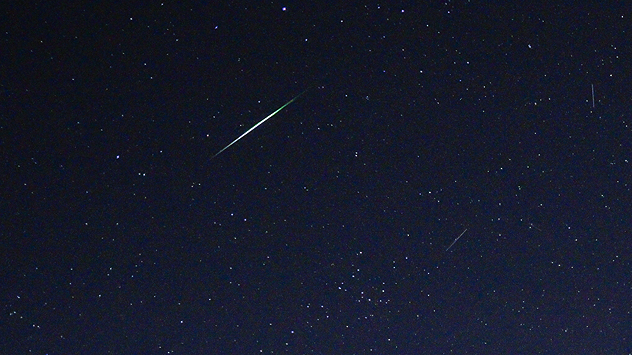
Shooting stars, part of the Geminid meteor shower.
Saturday, 13 December 2025

Spot a shooting star

King of meteor showers at its peak
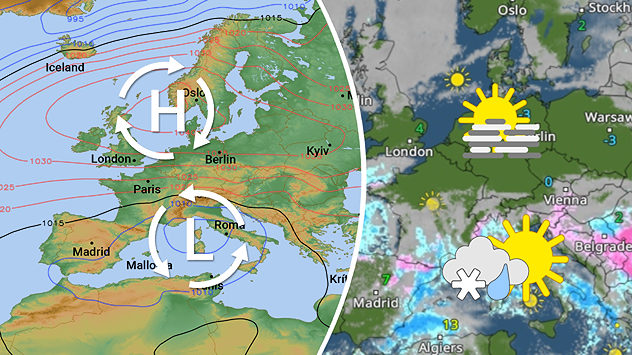
Weather map of Europe with high and low pressure areas marked. Isobar lines show the pressure distribution, alongside a forecast map. Different weather conditions from northern to Southern Europe.
Monday, 22 December 2025

"High over low"

Blocking weather conditions at Christmas
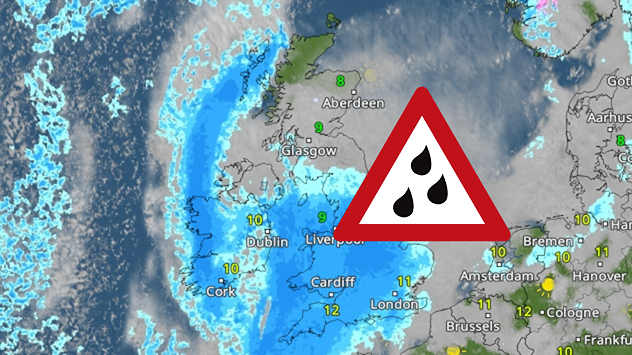
Radar map showing widespread blue rain bands over the UK and Ireland with a triangular heavy-rain warning icon placed over central Britain.
Tuesday, 16 December 2025

Thursday rain

Incoming downpour prompts warnings
All weather news
This might also interest you
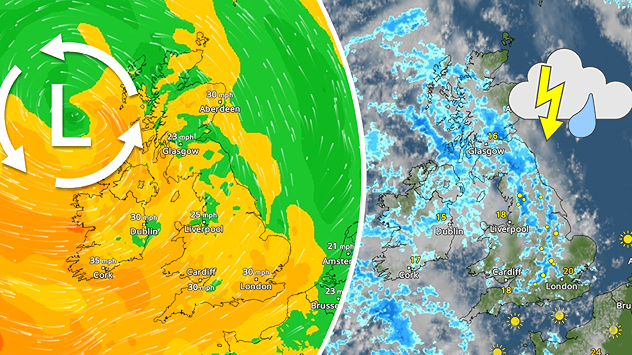
Split weather map showing the UK and Ireland. The left side illustrates strong winds circulating around a low-pressure system, with gusts of 20–30 mph highlighted in orange and yellow. The right side shows radar imagery with widespread blue rain bands and patches of thunderstorms, especially over northern England and Scotland.
Thursday, 28 August 2025

Breakfast brief

Remaining widely unsettled
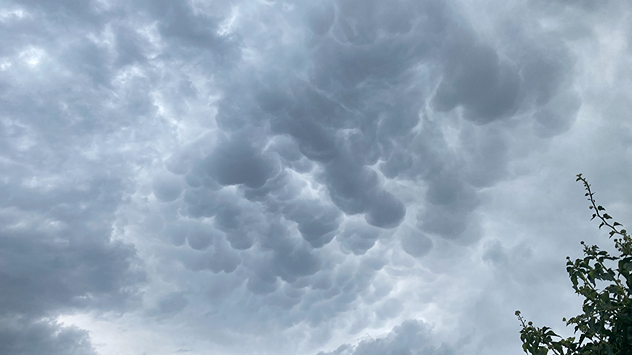
Mammatus clouds
Thursday, 21 August 2025

Unusual view

Mammatus clouds over Ireland
Friday, 22 August 2025

Breakfast brief

Sunny start for some, overcast later
All articles
Weather & Radar

Weather & Radar is also available on

Google Play StoreApp Store

Company

Contact us Privacy Policy Legal info Accessibility statement

Services

Uploader

Socials

facebooktwittertikToklinkList