Home / Editor's Pick /

Fall back tonight! Why do the clocks change?

14:00
26 October 2024

Fall back tonight!
Why do the clocks change?

Clock

We're all familiar with the 'spring forward, fall back saying', but why do we change our clocks here? Is it actually beneficial?

The days are getting shorter and winter is drawing in. The last Sunday of October marks the day that our clocks change, and at 2 am on Sunday 27th October, they will jump back one hour.

We gain one extra hour in bed, so it's great news for most of us, except those who will be working the night shift.

The key reason we use 'Daylight Saving Time' is so that we get the most out of our daylight. We gain lighter mornings as we will get up an hour earlier, but our evenings will be darker earlier.

This system has been in place since 1971, but was first introduced by the German government in 1916 during the first World War as means to save electricity.

However, similar ideas were introduced as early as the late 1800s, and with Coldplay's Chris Martin's great grandfather also being known to propose it in 1907.

In 2019, the European parliament voted to scrap the change. However the change has not yet been implemented and also no longer applies to the UK post-Brexit.

So, don't forget to change your clocks and whether you like the concept or not, there's unfortunately just no avoiding the colder and darker months.

Check your weekend weather hereread more
Weather & Radar editorial team
More on the topic
Weather radar showing clouds and showers over Algeria and Morocco. Next to it, a warning map with the rain area in Algeria marked. Surrounding regions mostly sunny and dry.
Thursday, 18 December 2025

Algeria affected

Rain in the desert
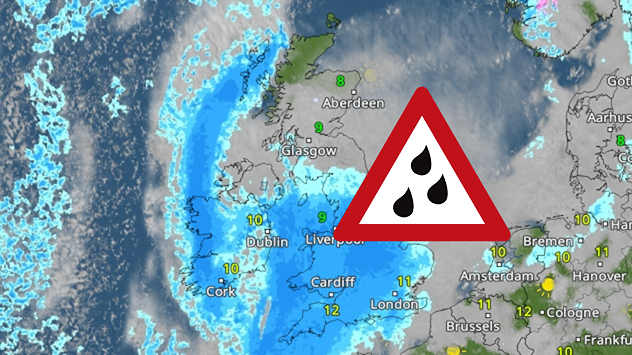
Radar map showing widespread blue rain bands over the UK and Ireland with a triangular heavy-rain warning icon placed over central Britain.
Tuesday, 16 December 2025

Thursday rain

Incoming downpour prompts warnings
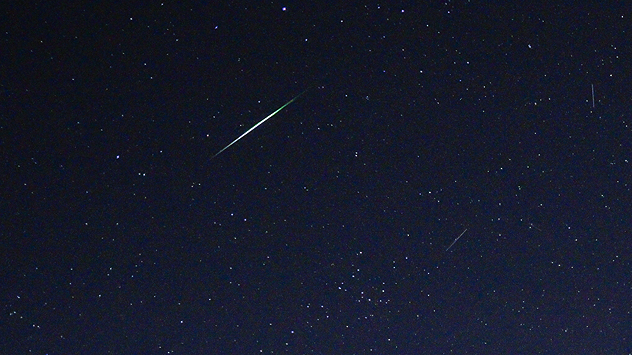
Shooting stars, part of the Geminid meteor shower.
Saturday, 13 December 2025

Spot a shooting star

King of meteor showers at its peak
All weather news
This might also interest you
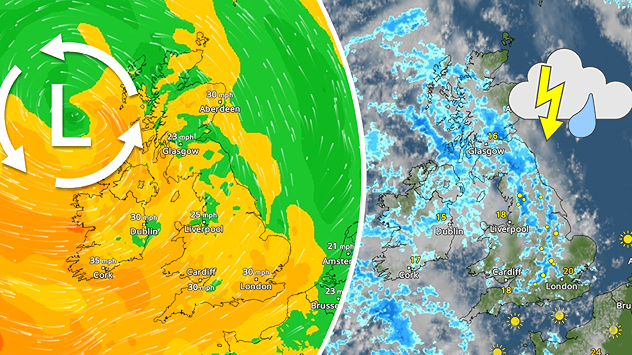
Split weather map showing the UK and Ireland. The left side illustrates strong winds circulating around a low-pressure system, with gusts of 20–30 mph highlighted in orange and yellow. The right side shows radar imagery with widespread blue rain bands and patches of thunderstorms, especially over northern England and Scotland.
Thursday, 28 August 2025

Breakfast brief

Remaining widely unsettled
Monday, 25 August 2025

Bank holiday outlook

Warm day turning gusty in places
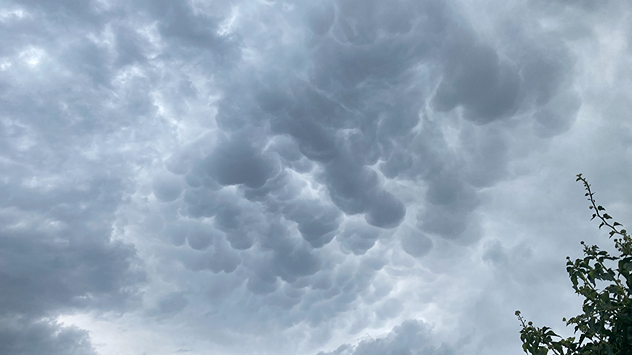
Mammatus clouds
Thursday, 21 August 2025

Unusual view

Mammatus clouds over Ireland
All articles
Weather & Radar

Weather & Radar is also available on

Google Play StoreApp Store

Company

Contact us Privacy Policy Legal info Accessibility statement

Services

Uploader

Socials

facebooktwittertikToklinkList