Home / Editor's Pick /

After Hurricane Otis hits: Tropical storms growing in intensity

12:00
29 October 2023

After Hurricane Otis hits
Tropical storms growing in intensity

Hurricane

After Hurricane Otis made history with an explosive intensification this week, research from the NOAA suggests tropical storms are growing stronger.

Capable of inflicting devastating damage, tropical storms are among nature's most ferocious phenomena. News that global warming is strengthening these systems is not welcome.

Tropical storms are fuelled by warm ocean water and humidity, as the world’s climate warms the fuel available to intensify these storms grows.

With oceans warming annually, the amount of water evaporating rises. This helps transfer moisture and heat into the air resulting in stronger winds and heavier rains. This is even stronger at times of an El Niño which is currently taking place in the Pacific.

It is mainly because of the water cycle. Water cycles through the environment and moves between the atmosphere, oceans, land, and reservoirs of frozen water.

Otis: Scenes of devastation in Acapulcoread more

Water seeps into the ground and evaporates back into the atmosphere, warming temperatures increase the upper limit of moisture in the air, which in turn raises the chance of heavier rainfall and storms.

Hurricanes are sometimes called “thermal engines,” as they convert the thermal energy of humidity into powerful winds. Therefore, when they make landfall, the systems start to weaken.

This does not prevent them from venturing inland for days at a time, and simulation data from Okinawa Institute of Science and Technology shows that hurricanes that developed over warmer waters took longer to weaken.

In 2022 the total cost of damages stemming from hurricanes during the Atlantic hurricane season totalled $165 billion according to the NOAA. If oceans continue to warm, this is likely to rise in the coming years.

Ryan Hathaway
More on the topic
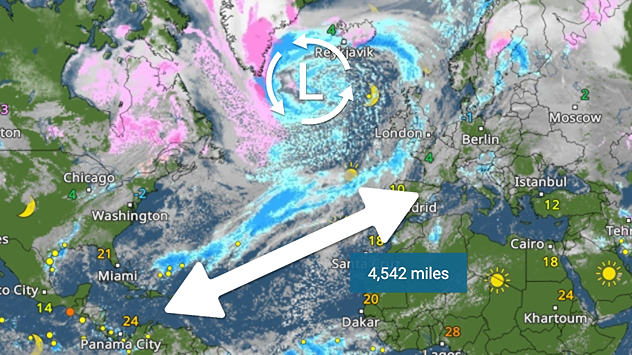
Weather map showing temperatures and a 4,542 mile route arrow over the Atlantic. Symbols indicate sun, clouds and precipitation from North America to Europe.
Wednesday, 17 December 2025

From Europe to America

Weather front over 4,500 miles long
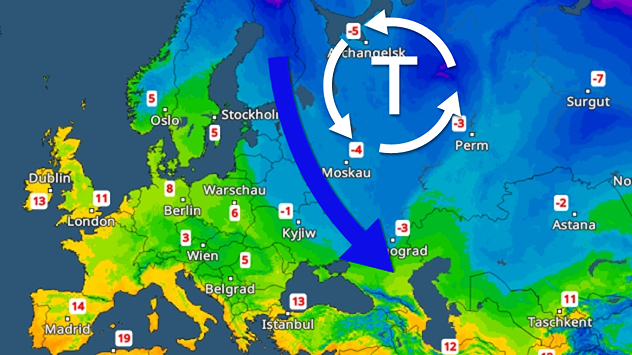
Map of Europe showing low pressure over Russia and a strong cold air flow towards Eastern Europe. Significant drop in temperatures across large parts of the east.
Thursday, 11 December 2025

Frost and snowfall

Cold air intrusion in Eastern Europe
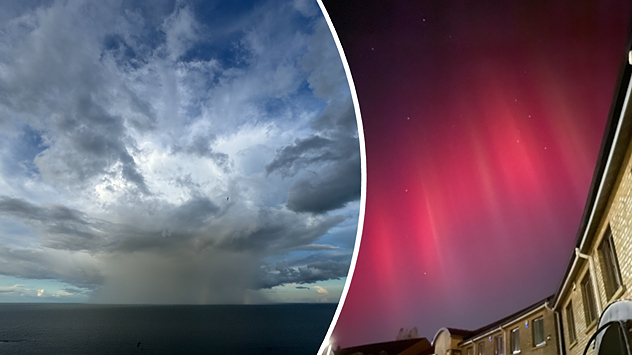
Split image showing a towering storm cloud with rain shafts over the sea on the left and a vivid red aurora illuminating the night sky above residential rooftops on the right, divided by a curved white line.
Tuesday, 9 December 2025

Your weather - Your shots

Autumn captured by you
All weather news
This might also interest you
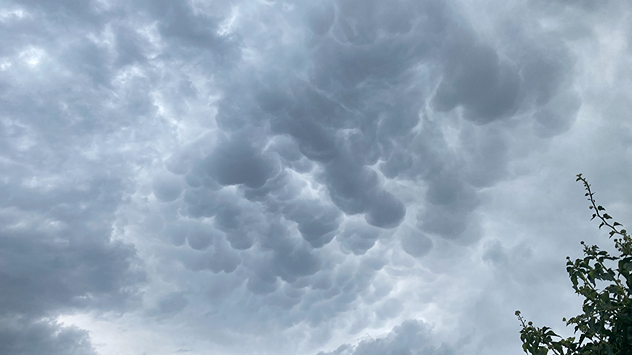
Mammatus clouds
Thursday, 21 August 2025

Unusual view

Mammatus clouds over Ireland
Split weather map showing the UK and Ireland. The left side illustrates strong winds circulating around a low-pressure system, with gusts of 20–30 mph highlighted in orange and yellow. The right side shows radar imagery with widespread blue rain bands and patches of thunderstorms, especially over northern England and Scotland.
Thursday, 28 August 2025

Breakfast brief

Remaining widely unsettled
Split weather map showing UK wind speeds in orange-red shades up to 40 mph on the left and warning levels in green-yellow on the right, with a central wind warning sign.
Wednesday, 22 October 2025

Warnings active

Storm Benjamin impacts the UK
All articles
Weather & Radar

Weather & Radar is also available on

Google Play StoreApp Store

Company

Contact us Privacy Policy Legal info Accessibility statement

Services

Uploader

Socials

facebooktwittertikToklinkList